
The more I travel, the more I want to see cool things in nature, and in particular explore national parks and similar sites around the world. Hand in hand with this, I aspire to level up my hiking skills.
Sometimes I catch myself in negative self-talk: “I’m too out of shape to hike!” Then I look back at an accidental hike I took because I didn’t realize how hard it was going to be. It was down a mountain to the Captain Cook area on the Big Island of Hawaii, a wildly scenic spot great for snorkeling. Once I got back to the top, I was high on life! I saw a family of goats, beautiful birds, the brightest yellow fish and the bluest water. I didn’t die, or twist an ankle on the sharp volcanic rocks in the path or even get bludgeoned to death on said rocks by the tide – all ways I imagined dying or injuring myself.
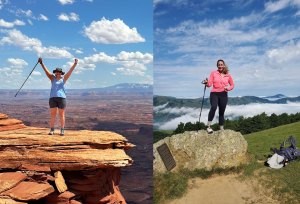
But how do you go from walking a couple of miles a day in flat Florida to mountain-goating your way around moderate or even challenging hikes around the world? Two remarkable women, Rachel and Jess, share their stories of going from couch to Camino and from foot surgery to hiking triumph, to inspire us all.
Rachel’s Journey to the Camino de Santiago
Rachel is an Indiana-based loan officer and owner of Perfectly Practical, a college degree-planning company that helps people save time and money by testing out of college courses. She is also a general badass who was inspired to hike the Camino de Santiago after hearing about how EconoMe Conference host Diania had taken the trek in Spain.
Rachel says: I’d never heard of the Camino before, I’ve never traveled to Europe, I’ve never even been a long distance hiker, but something about it stuck with me. Over the next year, I started piecing together as much information as I could about this 500-mile pilgrimage. I hadn’t even done any real solo travel at this point either, but something about this endeavor was calling me.
My “why” of hiking the Camino was to prove to myself that I could do big, scary things. Traveling to a foreign country, with only a backpack, hiking up to 20 miles a day, climbing mountains, and navigating routes and maps as a directionally challenged person seemed like an incredible feat, but I knew that if I could embrace the unknown, and test the waters outside of my comfort zone- what else could I be capable of?
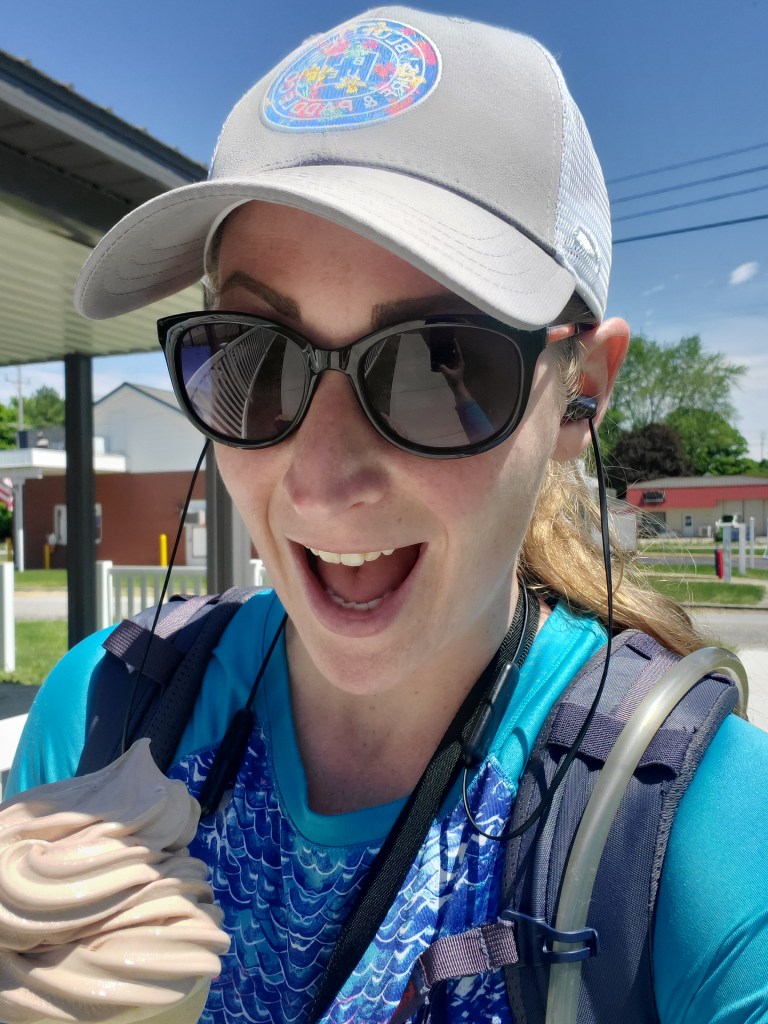
Hiking was not a regular activity for me until I started training for the Camino. My usual workouts include 4 to 5 days a week of strength training/power lifting with minimal cardio. I knew I’d have to get accustomed to walking anywhere from 15 to 20 miles a day to prepare for the Camino as well as figure out how to prepare for the elevation changes while training on the very flat terrain of rural Indiana. I started by doing lower body/leg workouts three times a week, then I started walking a few miles as often as I could (it was still winter in Indiana, so my initial hikes were weather dependent.) I only really started walking longer distances the last one to two months before my trip. It was an 11 mile round trip hike to my local ice cream shop. Each hike, I’d bring a couple of dollars with me to make sure I could get my celebratory ice cream cone at the half-way point (yes, will hike for ice cream!) I also started training in my full hiking gear which was a 40 L backpack filled with 20 lbs. of weight and wearing my trail runners/socks purchased for the Camino. I did this two to four times a week for a month prior to leaving. I also went to the nearest local park that had slightly rougher terrain and elevation changes to train a handful of times too. The important part for people just getting started is to commit to showing up consistently in whatever way you can. It may only be a one-mile hike some days, but showing up consistently is key to training your body. Also, listen to your body when things feel off. I noticed during the first few longer training sessions that when I got to the nine-to-ten mile mark, my hip started having pretty significant pain, so much so that I’d have to limp the rest of the way home. I’d never have noticed this without doing these longer practice runs. I ended up going to the chiropractor a couple of times, and never had the issue again. I’m glad I didn’t wait until I was on the Camino to test these limits. It would’ve been a significantly less enjoyable experience had I not addressed that issue in training.
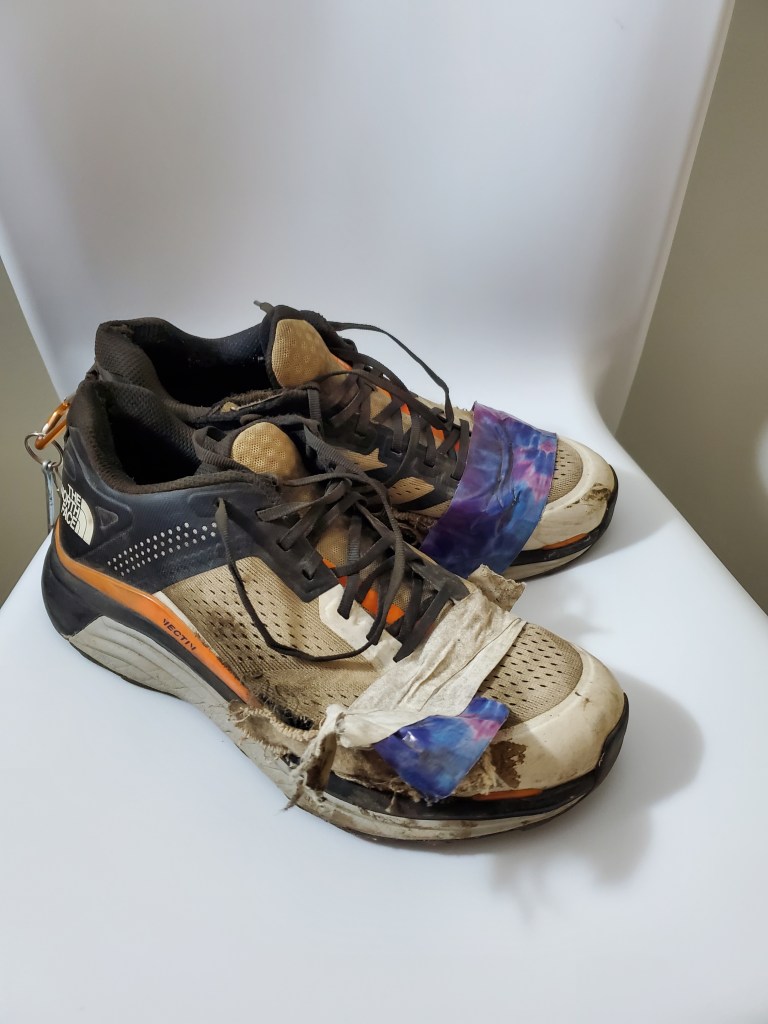
Regarding gear Rachel needed: A good pair of trail runners, always wear two pairs of socks, and have a water source/snacks. Also, a common saying is “the Camino will provide.” Whenever there was a pilgrim in need, it seemed there was always someone nearby that had exactly what they needed. I experienced this myself. I kept running into a woman from Taiwan along the trail, and we’d become friendly over the course of several days. As I walked into the town I was staying in for the night, I noticed she was standing in a group of other pilgrims all staring at her feet. I walked over to them, and she explained that her hiking shoes had caused her so much pain that she’d resorted to walking in flip flops, but was still wearing normal socks because even the friction of the flip flops were hurting her blisters. I had packed a pair of “toe socks” because they were supposed to help protect against blisters, but I’d never worn them because they were uncomfortable to me. They were the perfect solution for her feet/flip flop issue until her blisters had time to properly heal. I gave her the socks, and she was able to continue her journey. Always make sure you have a water source. I traveled with a refillable water bottle AND a hydration pack in my bag. I’ve also always been a cheap shoe person until I bought my trail runners for the Camino. They were $140, but my feet felt SO much better in them. I also only wore wool socks while training/hiking, and I think that also helped to keep the blisters away.
To prepare, I watched a lot of YouTube videos on how and what to pack, what to expect along the way, and how to handle issues that may arise like blisters or muscle pain. CaminoGuide, RobsCamino, and Wanderlusting Lawyer were all YouTube channels I watched for details about the Camino.

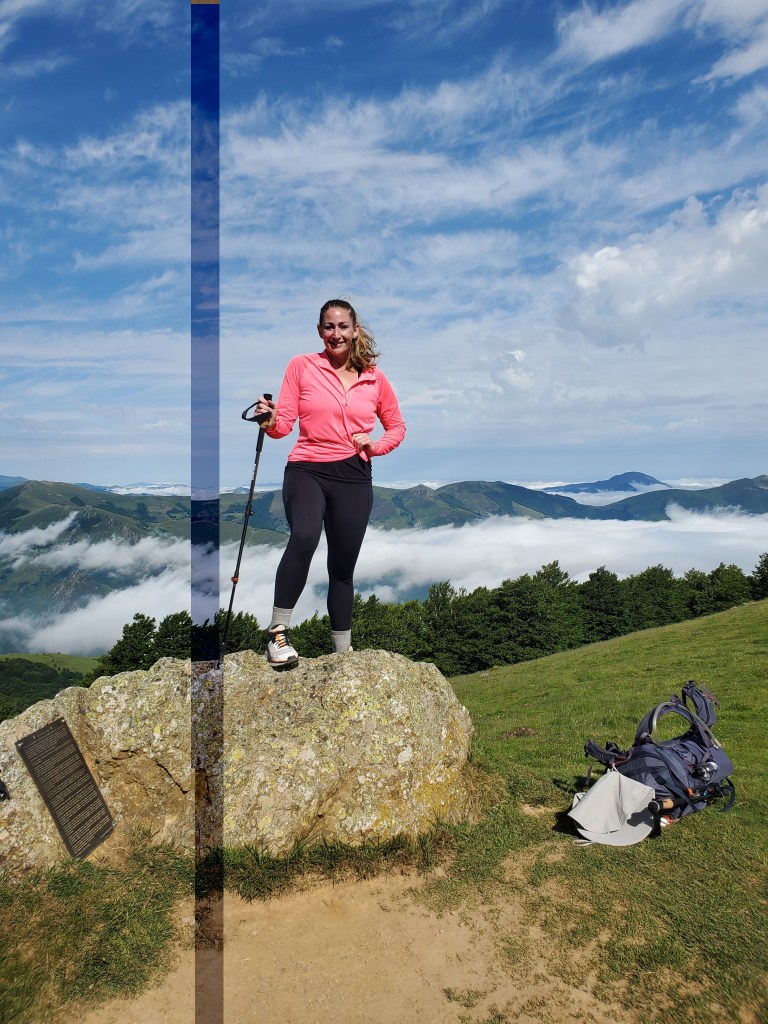
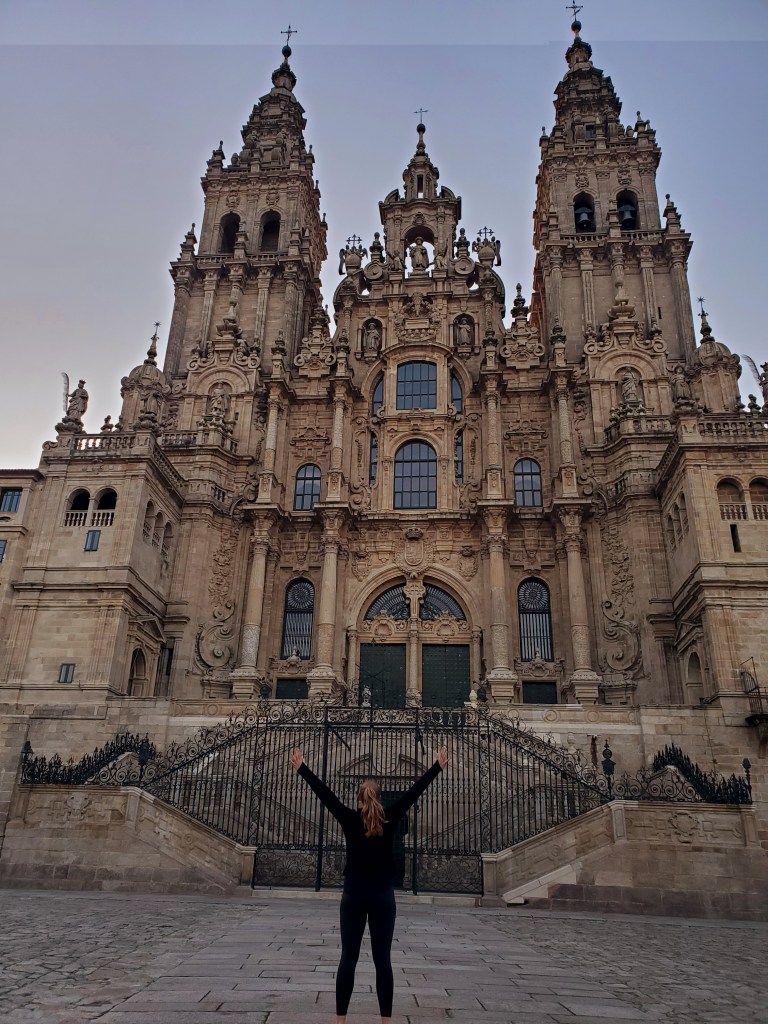
Hiking the Camino truly allowed me to feel unadulterated freedom for the first time in my life. My experience on the Camino taught me so many life lessons. Here are the most prominent:
- I have the freedom and autonomy to choose my every step in life.
- I now have a deep knowing that I can move into the unknown without feeling lost or fearful.
- Keeping forward momentum with faith and intention – even when unsure – there will be signs to point me in the right direction. I can feel supported and confident in those next steps.
- There’s a lot of value in being flexible and welcoming to every experience – good and bad.
- The most spectacular views were always after the steepest climbs.
Jessica’s Hiking Triumph after Foot Surgery
Hi! My name is Jessica! I am a 36-year-old adventurer, hiker, part-time vanlifer, dog mom, wife, writer, and lifestyle design coach. I run a platform called The Fioneers that focuses on helping build financial freedom and use that freedom to design lives they truly love. Within the next month, I will be moving from Boston to the White Mountains in New Hampshire so that hiking and the outdoors can be part of my daily life.
I’ve dealt with chronic pain for years. In fact, I first hurt my foot in 2017 on a trip to Europe. I landed in the Emergency Room in Paris with what they thought was a stress fracture. They prescribed some pain medicine, and I bought a walking boot from the local pharmacy and did my best to enjoy the rest of the trip. After I returned home, they did a bunch of tests and realized that I had a pinched nerve in my foot.
I got special orthotics, did physical therapy, and had minor surgery in 2018 to help alleviate the pain, but it only improved slightly. Then, COVID hit and my recovery got put on hold. Once I was able to get back in to see the doctor, we finally decided to do the “holy-shit-remove-the-nerve” surgery in 2022. After about five years, I could finally walk more than one mile at a time without pain!
During the saga, I told myself that truly all I wanted to ever do was to be able to walk three miles at a time. I wanted to be able to not have to always be so conscious everywhere I went of how far I’d have to walk and make sure I could take breaks. It took a while to recover from the second surgery, but I’m excited to say that I can now walk or hike about seven to eight miles at a time. I love that the limiting factor of how far or high I can go is now my strength and cardio, rather than foot pain. This means, I’m continuing to build up to longer hikes.
I love seeking out beauty and awe-inspiring experiences. There’s something that makes me feel small when I’m overlooking canyons, hiking to the peaks of mountains, or watching a waterfall flow over a cliff. Many studies show that experiencing awe in our daily lives can dramatically improve our mental health, and I’ve experienced this in my life. Having been unable to do these things for a long time, I’m even more grateful for these experiences.
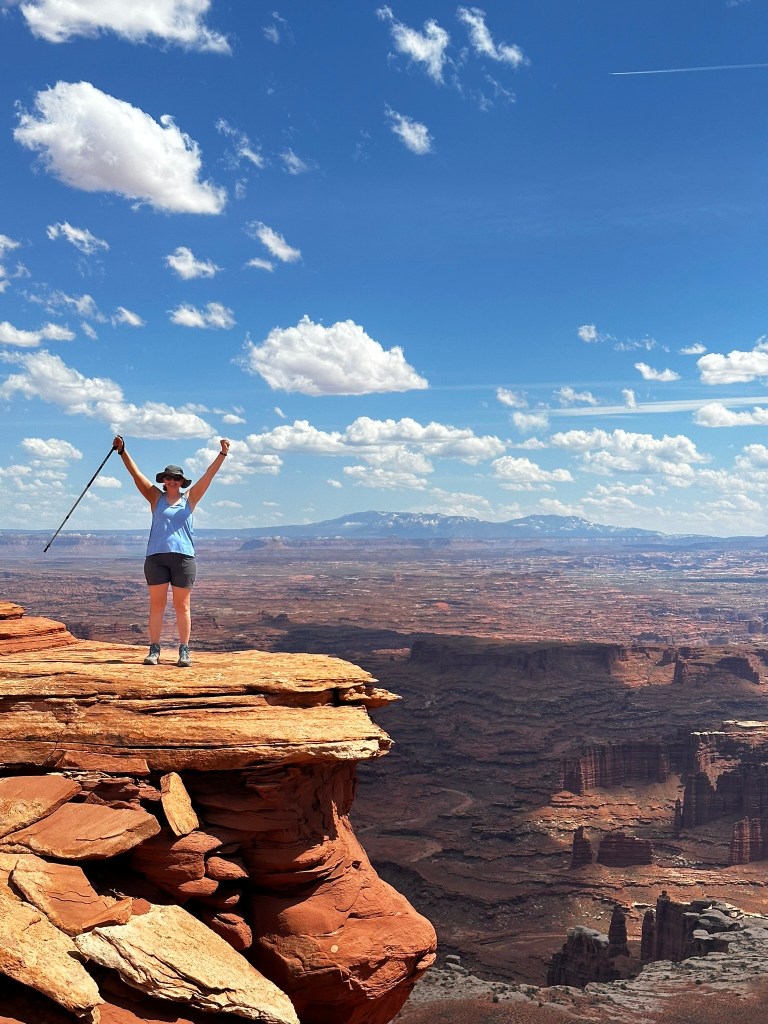

My husband and I run our own business and have the ability to work from anywhere. In 2023, we spent about half the year traveling around the country in our converted Sprinter van. We are typically traveling to national parks or other natural areas, so we hiked on an almost daily basis. Typically, we would hike or explore in the morning, and then come back to the van to work for the afternoon. It was surprising how much work we could get done after enjoying a morning hike!
When you are just getting started, I would encourage you to start small. Try doing a few one or two-mile hikes and slowly build up both the distance and elevation. A few months after my foot surgery, when we first started traveling in the van, we went to Vermont and I remember that we did a few hikes that were about a mile. As my foot healed, I started to do more hikes. Later that year I did a four-mile hike with a long rest in the middle.Once you build up your mileage, you can begin to also build up the elevation that you are hiking as well.
If you live in a place, like I do in a city, where you can’t hike on a regular basis, you can still train and prepare yourself. I try to take my dog on a two to three mile walk every day to keep my body moving, and I also do some strength training as well. Ultimately, building up strength and cardio are important. I still can’t run because of the foot issue, so I build up cardio by walking and carrying weight in a backpack (which some people call rucking). I started with 10 pounds and have worked my way up from there.
One important thing I would say is don’t push through pain. Muscle soreness is one thing, and pain is another. My foot issue was so severe because I didn’t listen to my body. My foot had been hurting for some time and then I overdid it. If you are feeling pain, take a break. Give yourself time to heal before you get back out there.
To get started with hiking there are very few things that you need. To do easy-to-moderate hikes, you need a comfortable pair of athletic shoes, a water bottle, and some sort of backpack to carry your water and snacks. If you are hiking somewhere that’s very sunny, you’ll also want a hat, sunscreen, and sunglasses. As you start hiking more or doing more difficult, rocky, or slippery trails, there are a few things that will improve your experience, such as a pair of good hiking boots, a daypack designed for hiking with a hydration pack, and hiking poles.
I’ve been inspired by several female hikers on Instagram including: @juliatakesahike, @ashley.goes.hiking, @laurensbigadventure, and @organized_adventurer.
As I’m planning travel, I head over to the Earth Trekkers first to see if they have a destination guide about where I’m going. They are outdoor adventurers, and I’ve found so many awesome hikes in their guides. Lastly, I like to use AllTrails. I’m not great at directions, and the maps work, even when you are offline, so I’m pretty confident that I’ll never get too lost.
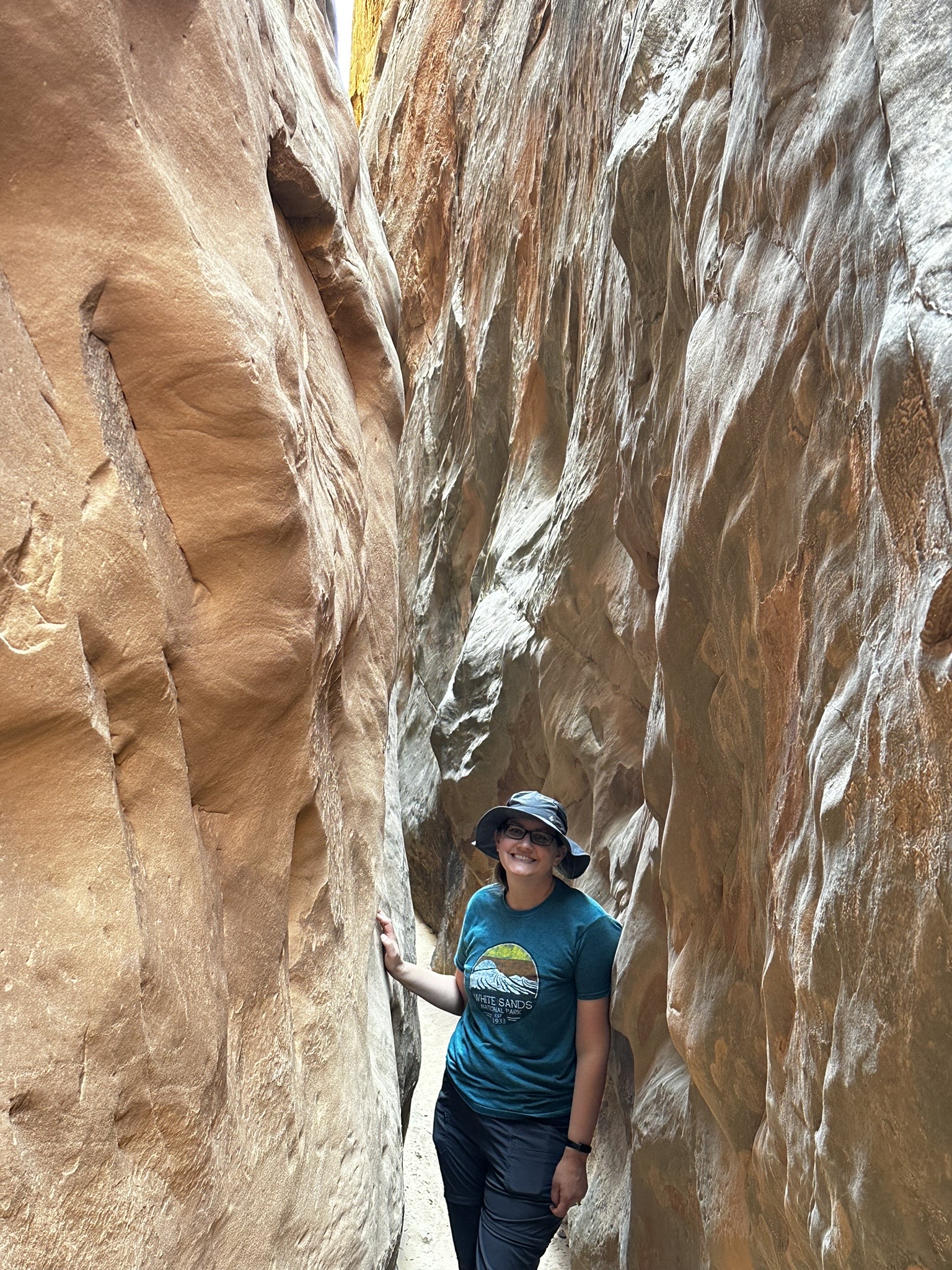
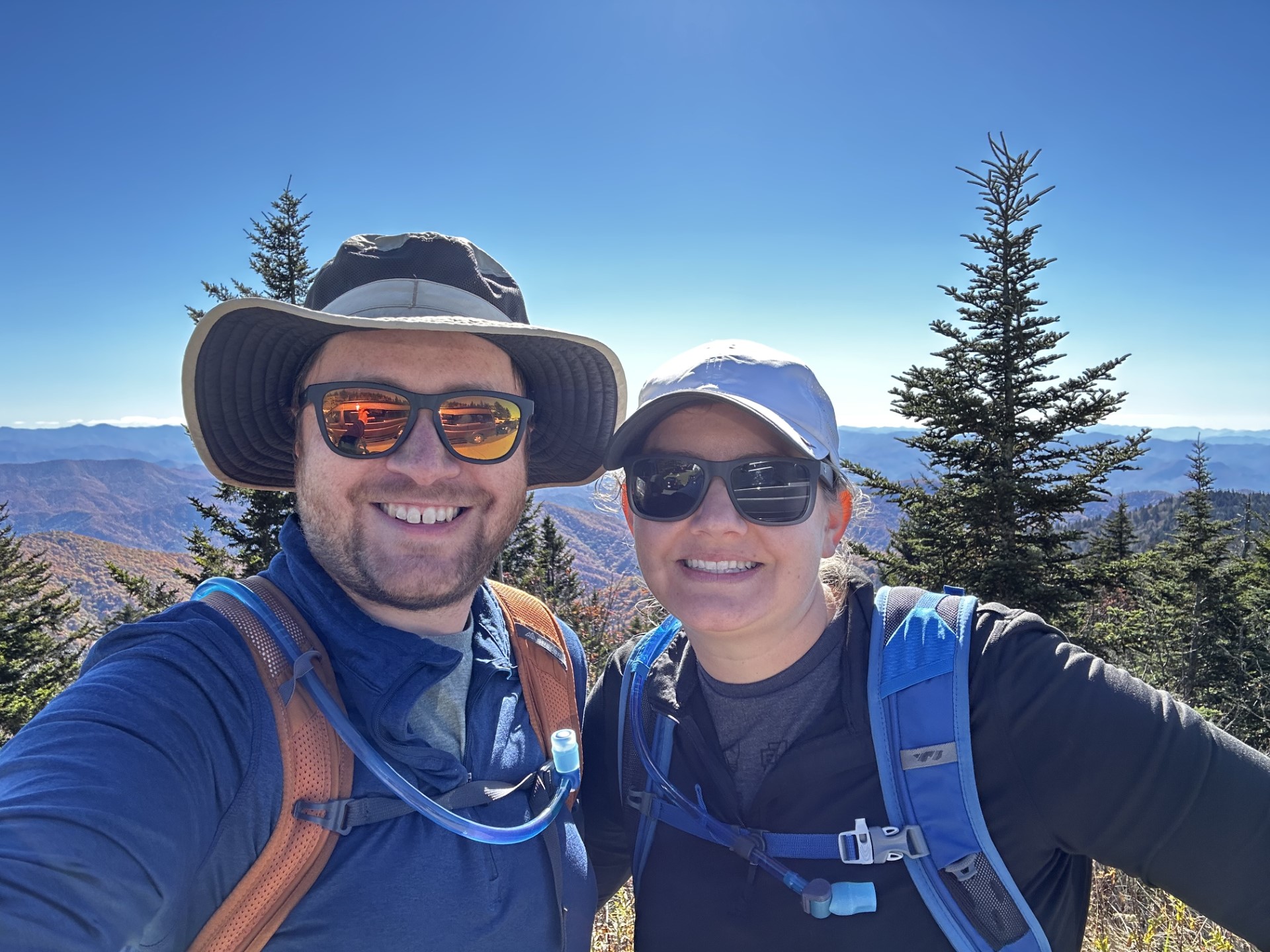

Slot canyon in Capitol Reef National Park, Great Smoky Mountain National Park, Arches National Park
I’d love to go for a hike with anyone who reads this! I travel across the country in my van and will be based in the White Mountains in New Hampshire from here on out. People can feel free to find me on my website (thefioneers.com) or Instagram (@thefioneers) to learn more about where we’ll be and connect!
A massive thanks to Rachel and Jess for sharing their inspiring hiking journeys, overcoming limitations in a smart and thoughtful way. See you out on the trail!
 TrekSimple